The rise of molecular biology has significantly revolutionized the clinical diagnosis and treatment of diseases, since modern molecular diagnostics can detect the presence of genetic materials (DNA & RNA) or proteins associated with a specific health condition or disease to discover its mechanisms at molecular level rather than a traditional cellular level. Therefore, scientists and technologists could assess and manage individuals' health in a more accurate way.
1. What is the relationship between DNA, Gene, and Chromosomes?
DNA or deoxyribonucleic acid is a long two-stranded molecule that contains our unique genetic code. To store this important genetic material, DNA molecules are tightly packed around proteins called histones to make structures called chromosomes. Human beings have 23 pairs of chromosomes in every cell, of which the sex chromosomes determine whether you are a male (XY) or a female (XX). While gene is just a fragment of one specific DNA that codes for a specific protein. Human beings have 20,000 to 25,000 genes. These genes account for only about 3 percent of our DNA. The function of the remaining 97 percent is still not clear.
2. The importance of DNA Extraction
The first step of almost all molecular diagnostics is to extract DNA from samples. Nowadays, increasing automation is enabling sophisticated extraction to be performed faster and more precisely. Our lab is equipped with the cutting-edge instruments to for fully automated genetic testing to ensure the testing accuracy.
3. If there are fewer target genes in the sample, how can it be tested accurately?
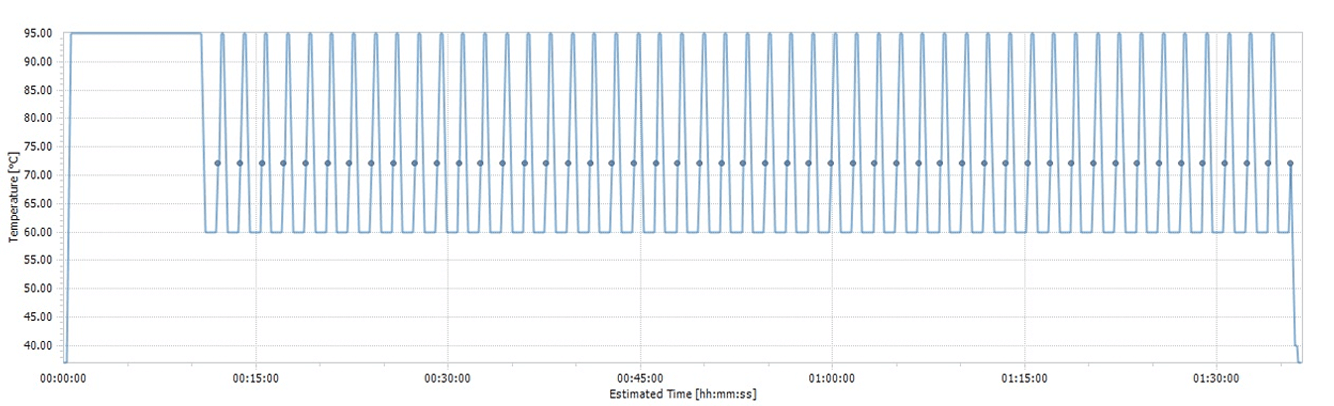
One of the essential methods applied in molecular diagnostics is polymerase chain reaction (PCR), the process of proliferating thousand copies of the DNA until they can be measured. It is the most widely used method in molecular diagnostics. The delicate DNA amplification machine in our lab is able to monitor the whole process of amplification and can successfully generate precise results through its computational calculations.
4. How to utilize the advanced molecular diagnostics to manage individuals' health condition?
Non-Invasive Prenatal Test (NIPT):
The test requires cell free fetal DNA from maternal blood analyzed with NGS technique (Next Generation Sequencing) to screen for any abnormal chromosome such as Down Syndrome in the fetus, instead of the conventional invasive method of Karyotype.
Cancer:
Since certain molecular diagnostic tests can provide prognostic information about cancer in its early stages, this helps to determine whether aggressive treatment is necessary to give. In addition, analyzing the molecular mechanism of cancer cells enables physicians to classify the cancers and choose the best therapy for their patients.
Personalized Medicine:
Since the test results of patients' Single Nucleotide Polymorphisms (SNP) detected by NGS techniquecan help to predict how quick that the patients can metabolize some particular drugs, the results are useful for physicians to find out if the drugs are effective for patients.
Our full automation workflow contributes greatly to minimize the experimental contamination and then improve significantly the accuracy and efficiency of tests significantly.
Technologies
Molecular diagnostic testing of patient samples starts with sample extraction and purification. Both manual and automated extractions are possible. Instead of manual extraction, HKLAB utilizes the advanced QIAGEN® instrument to enable the fully automated purification. Once the samples have been loaded into the machine, that are no chance to be contaminated manually. This can guarantee the satisfactory purity and yield of the target nucleic acid for the downstream experiment, so reliable test results can be achieved.
Technologies
In order to eliminate manual pipetting and cross-contamination errors, HKLAB has equipped with the QIAGEN® PCR liquid handling instrument to perform automated assay setup. Hence, rapid and precisive PCR results can be achieved with high efficiency. The QIAGEN® instrument is maintained periodically by experienced technicians to ensure error-free operation.










 Technologies


 www.laboratory.hk
